
Clearheat® Electrically Heated Glass
Invisible, comfortable, dust free and zero maintenance space heating
ClearHeat® thermostatically controlled heated glass can be used as a source of primary or supplementary space heating which provides gentle infra-red radiant heat to a room. It can also be used to eliminate the “cold wall “ effect of large windows which causes people nearby to feel cold as a result of losing body heat to a window, and also a downdraft of cold air creating a layer of uncomfortable cold air which builds up near the floor.
ClearHeat® eliminates the fan forced air flow inherent in the operation of central heating and other systems which heat a space by circulating heated air, and also eliminates the need for high maintenance boilers and pumps and water pipes required for conventional wall mounted radiators.
Control
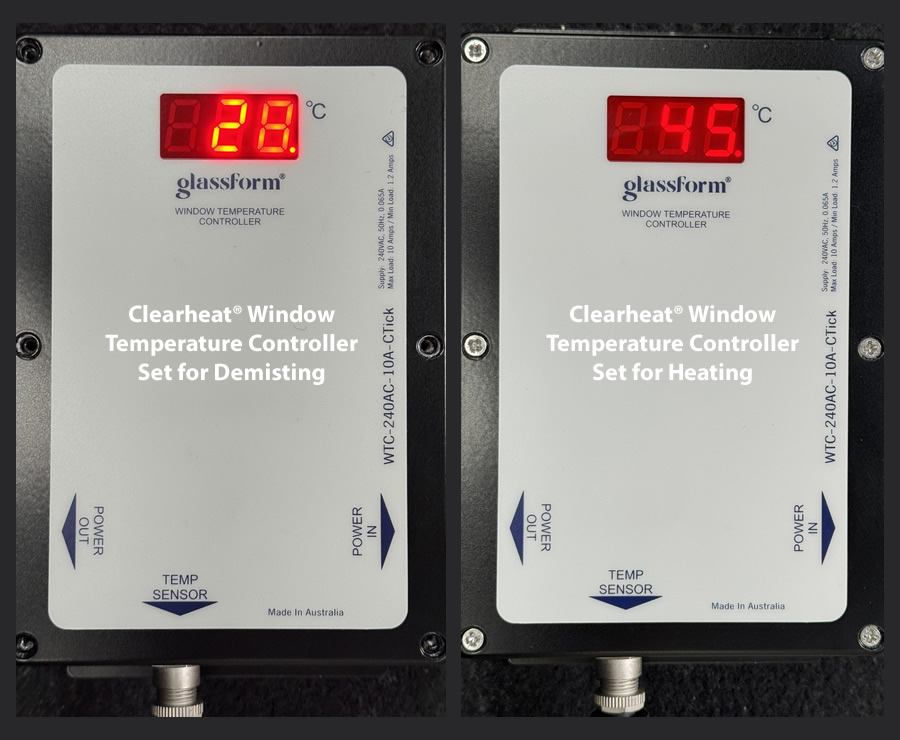
ClearHeat® is thermostatically controlled so that its temperature does not exceed a safe level, and is powered through a controller which connects to a standard 240V power outlet or a room thermostat or smart controller or a building management system.
Efficiency
ClearHeat® is custom manufactured as an insulated glass unit (IGU), so that up to 90% of the energy is radiated into the room, with the airspace and Low E coatings minimising heat loss to the exterior. In regions with extremely low external temperatures, a triple glazed unit can be provided to further reduce heat loss. Where it is desirable to limit solar heat gain in summer, Solarguard® solar control can be integrated into the window.
Condensation control
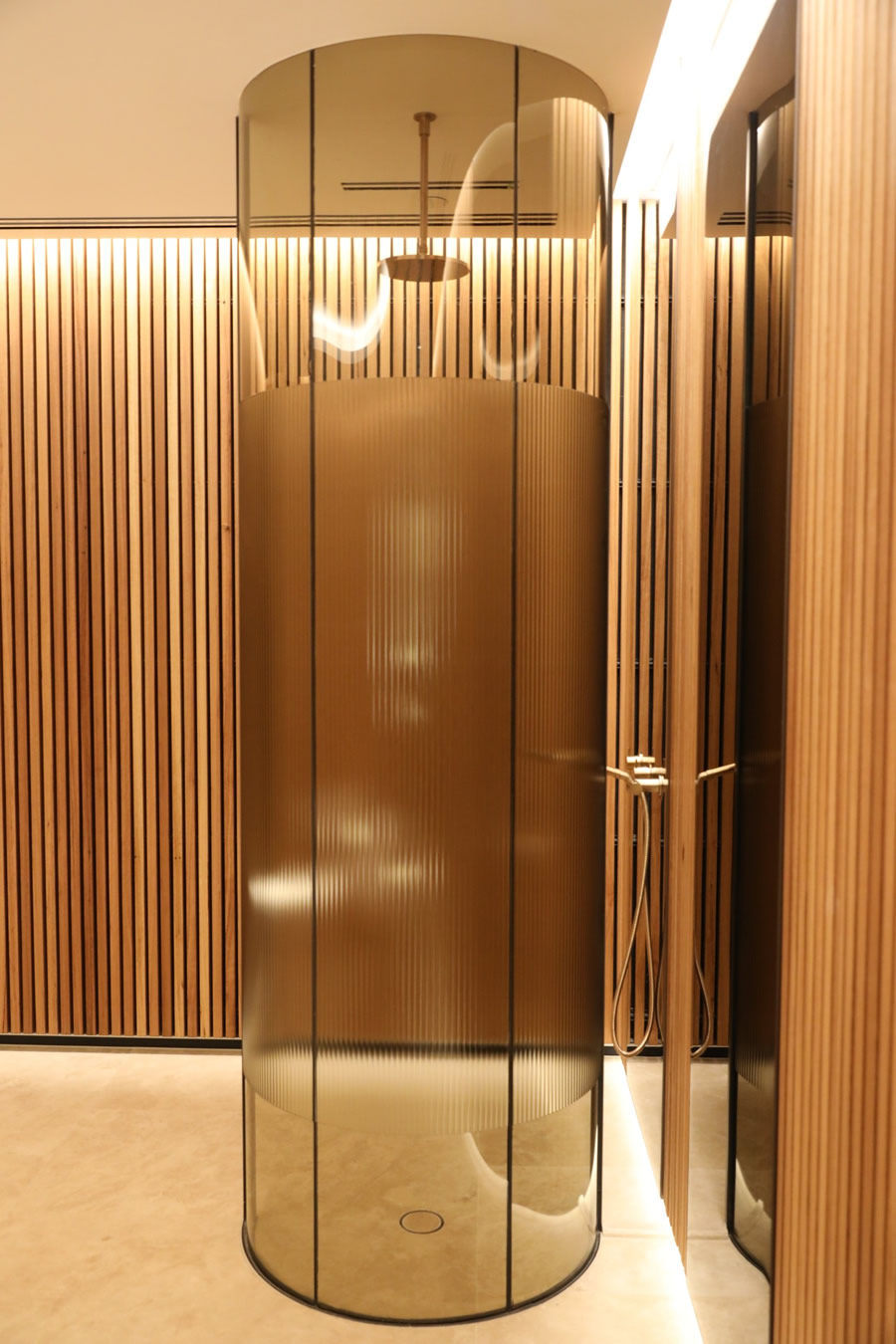
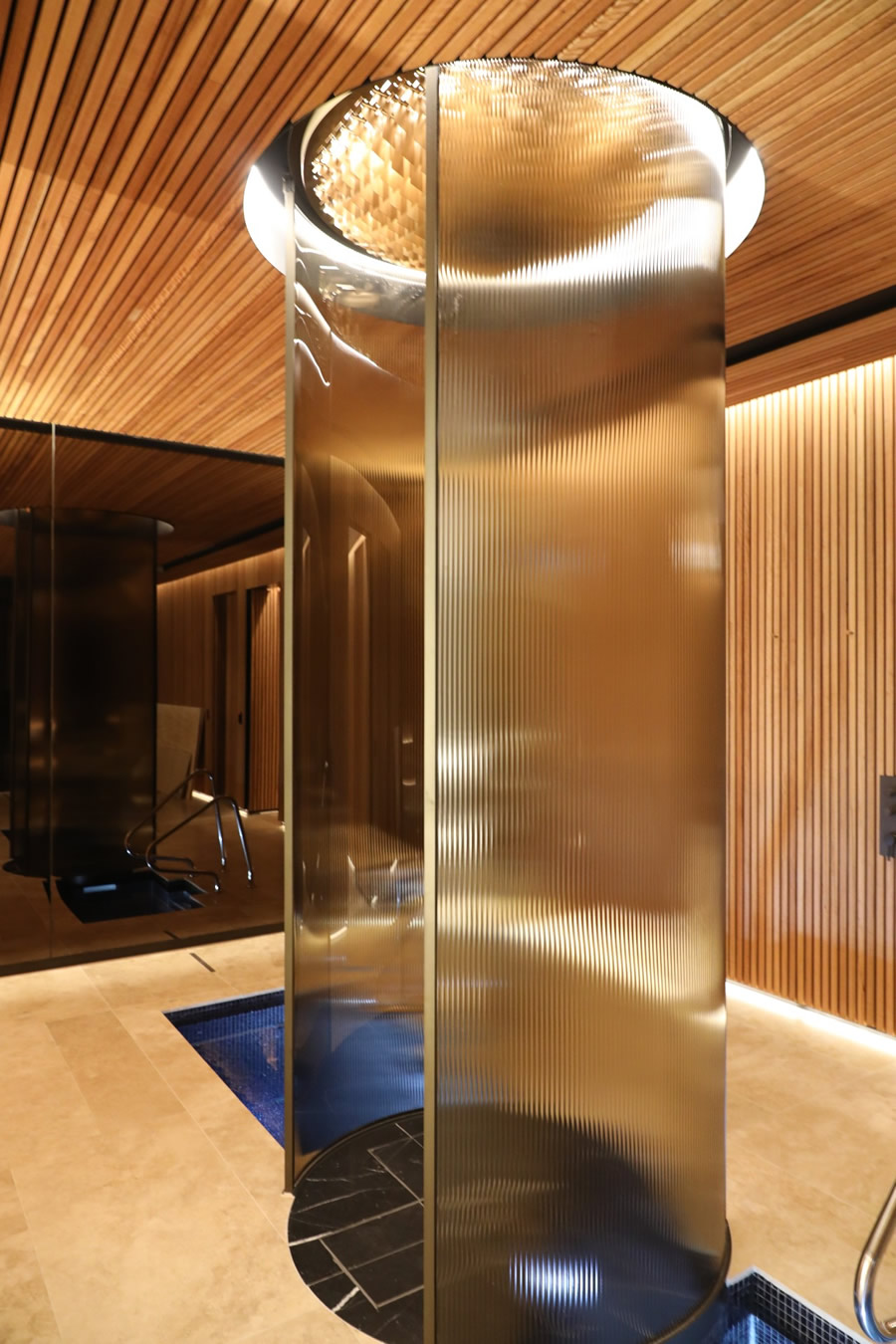
In swimming pools, saunas and steam rooms ClearHeat® can be used to prevent condensation on the glass, maintaining visibility and preventing water from condensing vapour from collecting at the lower edge and causing mould and safety issues.
Negligible running cost for condensation control
Conventional systems for condensation control involve hot air being continuously circulated over the windows, with significant cost for the equipment as well as the 24/7 electricity cost for operation of the fans and heaters. This mechanical equipment requires regular maintenance to assure reliable performance.
The ClearHeat® temperature control unit can control the glass temperature to an accuracy of 1°C, so that it can be set at only 1 or 2°C above the temperature in the space and prevent condensation. Consequently, the heat loss to the space is negligible so that the power cost to maintain the glass temperature is very low. There is no maintenance required.
Clearheat® Features
Custom manufactured to client’s requirements.
Can be temperature controlled to temperatures up to 45°C.
GenuinelyCertified™ to AS2208 as a Laminated safety glass.
Does not require special electrical supply – connects directly to a standard 10Aß power socket or to a timer or room thermostat.
Supplied as a double glazed or triple glazed unit.
Gallery



Attributes & Options
Can be supplied as a translucent or opaque decorative window or partition, with Shoji Rice Paper or other encapsulated elements.
Can be supplied flat or curved. Maximum size 4000mm x 1500mm.
Can be supplied as security glass for bullet, forced entry and/or blast resistance.
Can be supplied to satisfy U-Value, SHGC and/or sound attenuation specifications.
GenuinelyCertified™


Architectural Products

FAQs
It is glass which incorporates a transparent, electrically conductive coating that generates heat by passing a controlled current through the coating. Current is fed via busbars at two opposite edges of the pane, the coating warms uniformly across the surface, and the glass becomes a completely invisible radiator or condensation-control device. Visually, it's indistinguishable from ordinary glazing.
Three main applications: eliminating condensation (indoor pools, spas, museums, high-humidity buildings, cold climates), melting snow and ice (skylights, glass roofs, canopies), and space heating/comfort — either as a supplementary heater or the primary heat source, removing the "cold window effect" so people can sit comfortably next to large glazed areas.
Yes, it is a radiator, but less intense and provides more gentle heat. The inner pane is controlled at temperatures up to 45°C and radiates heat. As a rule of thumb, heated glazing of about 10–30% of a room's floor area can serve as the sole heat source, depending on the building's insulation level. It frees wall space and eliminates forced circulation of air.
Output is specified per application: roughly 50 W/m² of glass area for condensation control, 25–100 W/m² of room area for comfort/radiant heating, and 300–500+ W/m² of glass area for snow melting. Running costs depend entirely on control strategy — thermostat, dew-point sensor, or building management integration means it only draws power when needed. As electric resistance heating, it's efficient at converting energy. In condensation control applications with a known space temperature the energy consumption is very low.
Yes — it's a mature, certified technology. The conductive layer sits inside a laminated or insulated unit where it can't be touched, system run on mains voltage, units are laminated so a broken pane fails safely, and the controller limits surface temperature to 45°C, to prevent injury from contact with the glass. The window temperature controller is RCM certified in accordance with AS/NZS 4417 and therefore approved for installation in buildings in Australia and New Zealand in accordance with the EEES (Electrical Equipment Safety System).
Almost always as the inner pane of an insulated glass unit (IGU), with the heated coating facing the cavity or the room, so the heat goes into the building rather than out. It's available in double and triple glazed units, laminated versions, and combined with low-E, solar control, acoustic, and safety glass.
No. There are no mechanical or other moving parts that will wear or degrade with time. The glass should be kept clean to maintain radiant efficiency.