
Attackguard® and Prisonguard® Forced Entry Resistant Glass
Attackguard® and Prisonguard® Forced Entry Resistant Glass
Attackguard® and Prisonguard® Forced Entry Resistant Glass are a durable and robust security and safety solution, designed to provide protection against crowbars, sledge hammers, axes, bricks and striking implements for an effective transparent barrier and are rigorously tested and certified to Australian and International Standards. These products do not incorporate polycarbonate or other materials prone to delamination and embrittlement and are therefore warranted against delamination and performance degradation for a minimum of 10 years.
Standards
Prisonguard® product can be supplied certified to AS3555, EN356 and UL972.
UL972 High Impact Test.
5lb Ball from 40 ft.
Applications
Prisons and Police Stations
Data Centres
Government offices and Embassies
Jewellery shopfronts and showroom display windows/counters
Museum doors and showcases
Residential external windows and doors
Gallery
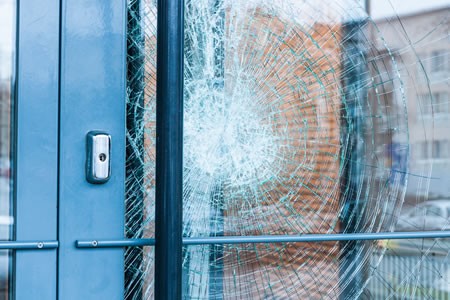
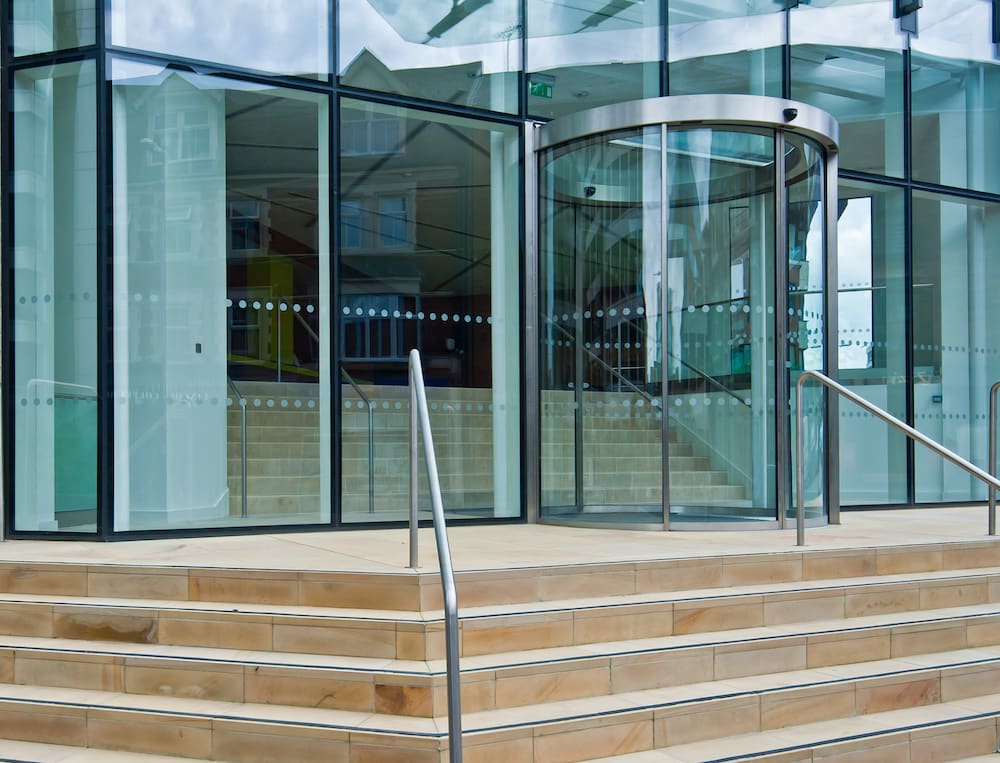

Attackguard® & Prisonguard®
Attributes & Options
Certified to AS 3555 and corresponding international standards
Custom made 5 m x 1.8 m in flat panels & 4 m x 1.8 m in curved panels
Can be GenuinelyCertified™ as laminated safety glass to AS/NZS 2208 and AS/NZS 2080
Can incorporate Solarguard® Solar Control
Can be formulated and GenuinelyCertified™ for Bullet and/or Blast resistance to AS 2343 and/or ISO 16933
Can be supplied as one way viewing glass
Does not contain polycarbonate or other materials that age and embrittle with time and exposure to ultraviolet and visible light. Hence the peace of mind that Glassguard® will maintain its performance for the life of the building or other installation
Can be supplied using low iron glass for improved visible light transmission and colour neutrality
GenuinelyCertified™

Architectural Products

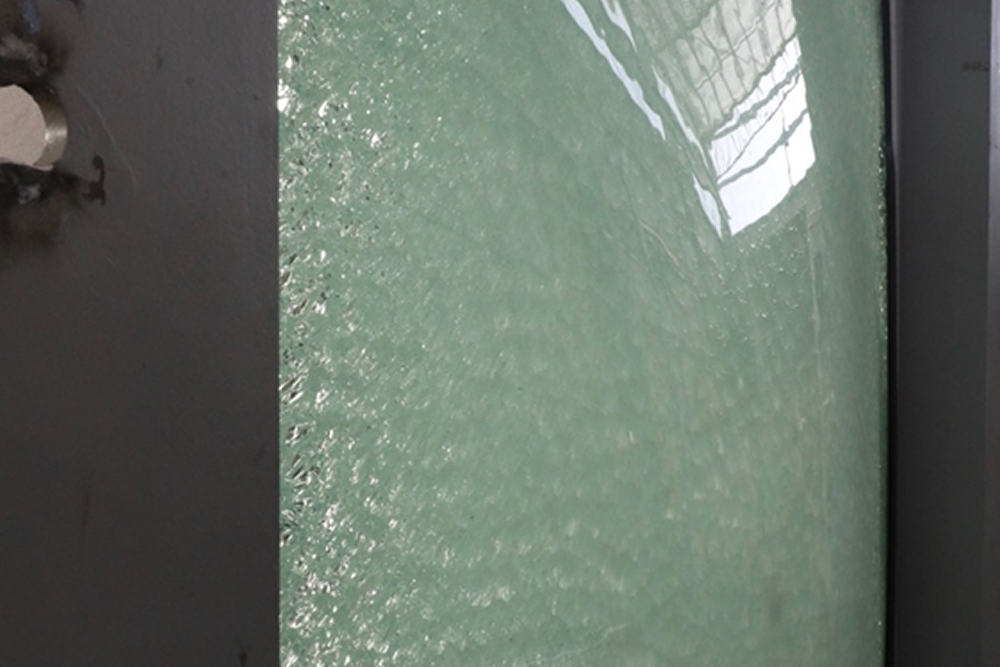
FAQs
It is security glazing designed to withstand sustained physical attack — axes, sledgehammers, hammers, crowbars, bricks, kicks — long enough to deter or delay an intruder. Unlike standard glass, it stays intact (or holds together in its frame) even after repeated blows from threats described in the Standard specified. It has been available and subject to continuous development since 1989.
No. They're tested to different standards for different threats. Bullet-resistant glass stops projectiles; forced entry glass resists blunt/sharp tool attacks over time. Some products are rated for both, but one rating doesn't imply the other.
It is tested and GenuinelyCertified™ to AS3555, UL 972 (burglary-resistant glazing), and EN 356 (P1A–P8B). Ratings are generally based on how many impacts or how much attack time the glazing withstands. It is also a safety glass certified to AS2208 and Z97.1
Laminated glass comprising two or more glass layers bonded with interlayers. In an attack, the interlayer holds glass particles together so there's no easy opening even when the glass cracks. If properly installed, an attacker would need to penetrate the glass-interlayer assembly. Prisonguard® does not incorporate polycarbonate, which has a propensity to embrittle with time, and to delaminate.
Depending on the Standard and the classification, from around 5 to 20 minutes of sustained attack. That delay is the point — most forced entry attempts are abandoned within a minute or two, and it buys time for security response.
From $600 per square metre and more, depending on the rating.
Often yes — either by replacing the glazing in existing frames if the frames are strong enough and wide enough to accept the glass.
No. Film improves ordinary glass and slows smash-and-grab attempts, but Prisonguard® withstands far more aggressive and sustained attacks. Film is a budget upgrade, not an equivalent.
Critically. An attacker can defeat strong glazing by pushing the whole panel out of a weak frame. Forced entry systems are tested as complete assemblies — glass, frame, and anchoring together.
Prisons, data centres, police stations, embassies, mental health facilities, hospitals, commercial buildings, petrol stations, storefronts and retail (smash-and-grab prevention), schools, government buildings, pharmacies, banks and increasingly homes — especially entry door sidelites and ground-floor windows.
It can be supplied flat or curved; clear or tinted or translucent or fluted; with integrated solar control to reduce SHGC; single laminate or in an IGU (insulated glass unit) to enhance thermal performance and/or sound attenuation; as a one way observation window; with anti-spall film applied to protect from glass shards.
Maximum panel height is 5000 mm and maximum width is 2700 mm for flat panels. Curved panels up to 3600 high x 2400 mm girth are available.