
Glassguard® Blast Resistant Glass
Glassguard® Blast Resistant Glass
Glassguard® Blast Resistant Glass is a durable and robust product range tailored for each specific application to provide protection against blast threats as anticipated by specific risk assessments. Glassguard® is the only Australian product range which is based on actual arena blast testing, and does not incorporate polycarbonate or other materials prone to embrittlement or delamination, and therefore is supplied with an industry leading warrantee that for a minimum of 10 years the product will retain its integrity and performance.
This product range is now available in sizes up to 5 metres x 1.8 metres, significantly reducing constraints on architectural design.
Applications
Government offices, facilities and embassies
High security police stations and prisons
Armored and special vehicles
High profile public buildings
Corporate offices and data centres
Gallery


Attributes & Options
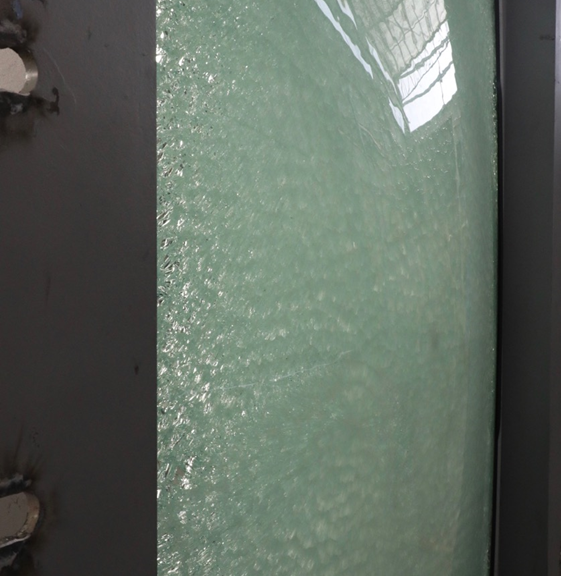
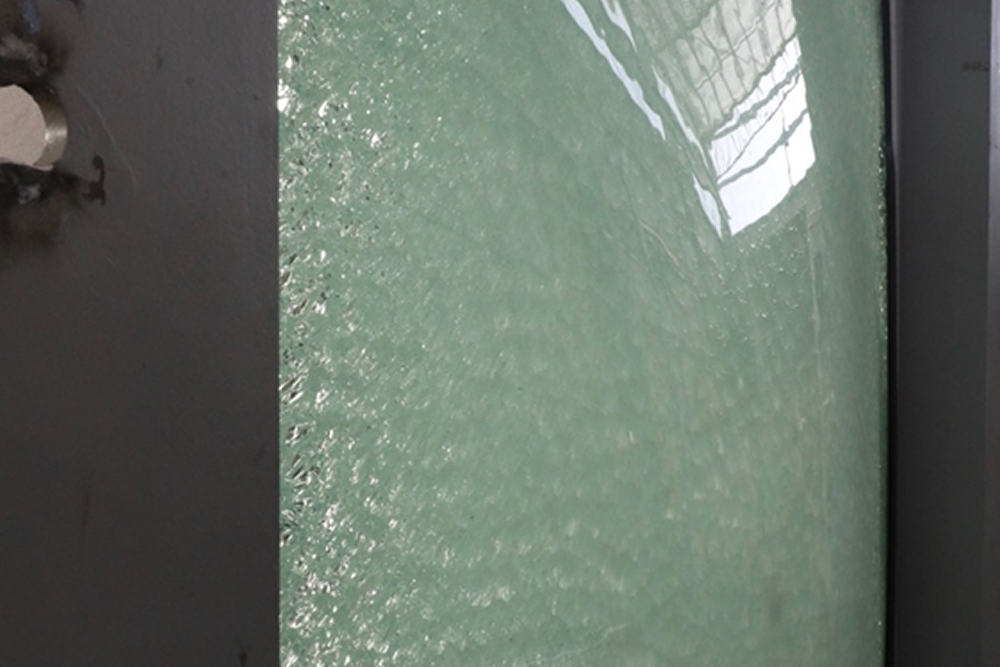
Designed and manufactured to provide ZeroSpall™ protection from low, medium and high blast loads, based on actual blast test results.
Can be formulated to also be Bullet and Forced Entry resistant.
Unique constructions evolved from 30 years of research and development have resulted in more flexible, thinner, lighter and optically superior solutions.
Is warranted not to delaminate for a minimum of 10 years.
Panel flexibility and energy absorption reduces the blast load transferred to the frame and structure.
Can incorporate Solarguard® solar control for superior solar heat rejection while retaining high visible light transmission.
Can be manufactured in sizes up to 5 m x 1.8 m for flat panels and 4 m x 1.8 m for curved panels.
Can be fabricated into an insulated glass unit (IGU).
Can be supplied as one way observation glass.
GenuinelyCertified™


Security Products


FAQs
It's glazing engineered to withstand explosion overpressure without creating lethal flying fragments. It is typically laminated glass whose interlayer stretches and absorbs blast energy, holding shards together even when the glass breaks. The goal usually isn't to stay unbroken — it's to fail safely without releasing dangerous glass shards or splitting to allow the blast to penetrate into the protected space.
Because glass fragments cause the majority of injuries in most urban bombings — studies of events like the Oklahoma City bombing found flying glass accounted for a large share of injuries, often far from the blast itself. Blast glazing exists primarily to eliminate that fragment hazard.
Glassform has data from Shock Tests as well as Range testing for a range of blast threats up to reflected blast pressure of 1600 kPa and reflected impulse of 2500 kPa.ms for various panel sizes, which enables the manufacture and supply of glass certified to CEN range test classification of EXR4 or EPR4. Additionally Glassform has data for Arena testing with 100 kg of TNT at standoff distances from 10 m to 45 m. which enables the design of glass to resist a large range of blast threats.
Performance can be classified from "No Break" through "Minimal Hazard" to "High Hazard," based on whether fragments fly into the protected space and how far. A window can crack completely and still earn a good rating if fragments are retained.
No — different threats, different tests. Blast loading is a short overpressure pulse over the whole surface; bullets are localized penetration; hurricane testing is impact plus cyclic pressure. There's overlap in construction (all use laminates), and some products carry multiple ratings, but one rating never implies another.
Most commonly using laminated glass with layers of PVB or ionoplast (e.g., SentryGlass®) interlayer. In some situations multi-ply laminates or laminated insulated units are designed to achieve the performance required. Chemical toughening of glass plies in a laminate can allow the glass to deflect much more before if fractures, thus withstanding higher blast levels than otherwise achievable.
Yes — arguably more. The system is only as good as its weakest link: the glass must stay bonded in the frame (structural silicone bite is critical), the frame must transfer load to anchors, and anchors to structure. Blast standards test and rate the entire assembly, and a strong laminate in a weak frame simply becomes a large projectile.
Government buildings, military facilities, embassies, courthouses, financial institutions, data centres, petrochemical control rooms and refinery buildings, transportation hubs, and increasingly commercial towers in high-risk urban locations.